


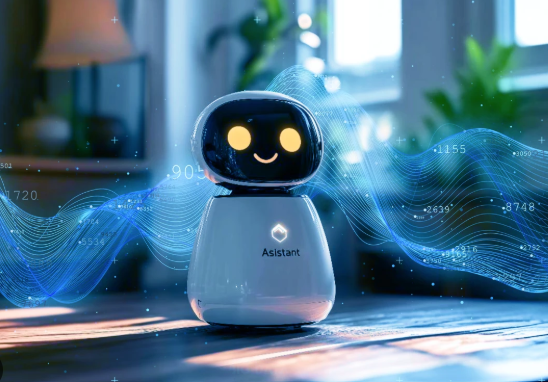
The global voice assistant market is currently experiencing a period of explosive expansion, fundamentally reshaping consumer engagement with technology across a multitude of platforms. This remarkable surge is not a singular phenomenon but is rather propelled by a confluence of powerful technological and behavioral trends. The widespread proliferation of smartphones has served as the initial and most significant catalyst, placing a voice-enabled assistant in the pockets of billions of people worldwide. Building on this foundation, the rapid consumer adoption of dedicated smart speakers, such as Amazon's Echo and Google's Nest series, has successfully brought voice-first interaction into the home, creating a central hub for smart device control and ambient computing. The incredible pace of the Voice Assistant Market Growth is also fueled by parallel advancements in enabling technologies. Improvements in AI, machine learning, and natural language processing have made assistants more accurate, responsive, and genuinely useful, while the expansion of 5G and ubiquitous Wi-Fi connectivity ensures the seamless performance required for a positive user experience. These factors collectively create a fertile environment where consumer demand and technological capability feed into one another, accelerating the market’s upward trajectory.
A primary engine of growth for the voice assistant market is its pivotal role within the smart home ecosystem. Voice assistants have emerged as the preferred user interface for managing the increasingly complex web of connected devices that constitute the modern smart home. Instead of navigating multiple apps, users can employ simple, intuitive voice commands to control lighting, adjust thermostats, lock doors, view security camera feeds, and operate smart appliances. This centralization of control significantly enhances convenience and creates a more cohesive, integrated living experience. This synergistic relationship benefits both sides of the equation: the perceived utility of a smart home is greatly enhanced by a voice assistant, and conversely, the primary reason for many consumers to purchase a smart speaker is to control their other smart devices. As manufacturers continue to embed voice capabilities directly into appliances like refrigerators, televisions, and washing machines, the assistant’s role as the omnipresent, ambient orchestrator of the home environment will only become more entrenched, driving sustained hardware sales and deepening user engagement with specific voice platforms. This integration solidifies the assistant’s place as an indispensable utility rather than a mere novelty.
Beyond the confines of the home, the automotive sector has emerged as another critical and high-potential frontier for voice assistant market growth. The integration of sophisticated voice assistants into vehicle infotainment systems is rapidly moving from a luxury feature to a standard expectation. The primary driver in this domain is safety; by allowing drivers to control navigation, make calls, send messages, and select music without taking their hands off the wheel or their eyes off the road, voice interfaces can significantly reduce distractions. Tech giants are forging strategic partnerships with leading automakers to embed their platforms—such as Android Automotive with Google Assistant or Amazon’s Alexa Auto—directly into the vehicle's core operating system. This provides a more seamless and powerful experience than tethering a smartphone. This in-car environment represents a massive opportunity for engagement, capturing the attention of consumers during their daily commutes. As vehicles become more connected and autonomous, the role of the voice assistant is expected to expand further, evolving into a personal travel concierge that can manage schedules, pre-condition the home environment, and facilitate on-the-go commerce, thereby opening up new revenue streams and solidifying its indispensability in daily life.
Another significant dimension of market growth is the expansion into emerging economies and the increasing focus on localization and inclusivity. While North America and Europe have historically led in adoption, the Asia-Pacific region, with its massive population and rapidly growing middle class, represents the next major growth wave. To capitalize on this opportunity, platform providers are investing heavily in adapting their services to local languages, dialects, accents, and cultural contexts. A voice assistant that cannot understand regional linguistic nuances or provide locally relevant information will fail to gain traction. Therefore, developing robust multilingual capabilities is not just a technical challenge but a strategic imperative for global market leadership. Furthermore, voice assistants are proving to be a transformative technology for users with disabilities, offering unprecedented levels of independence for individuals with visual impairments or mobility challenges. This focus on accessibility not only broadens the potential user base but also highlights the technology’s potential for social good, creating positive brand sentiment and further justifying investment in its continued development and refinement across all global markets. The ability to cater to diverse linguistic and accessibility needs will be a key differentiator for success.
Explore More Like This in Our Trending Reports:
Virtual Reality In Therapy Market

 English
 Arabic
 French
 Spanish
 Portuguese
 Deutsch
 Turkish
 Italiano
 Russian
 Romaian
 Portuguese (Brazil)
 Tiếng Việt