


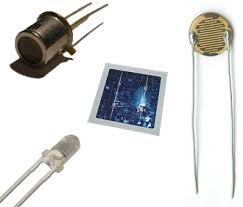
In our current group dialogue, we must address the technical sophistication required to maintain the current Sensor Market forecast as we move toward an era of hyper-connectivity. The demand for Micro-Electro-Mechanical Systems (MEMS) has skyrocketed, fundamentally changing how engineers approach product design in the consumer electronics and wearable technology segments. These tiny, yet incredibly powerful components allow for the measurement of pressure, temperature, and motion within extremely confined spaces, enabling the sleek designs of modern smartwatches and medical implants. However, this push for miniaturization brings significant manufacturing challenges, including the need for specialized fabrication facilities and the management of complex supply chains for rare materials. As we analyze the market, it becomes evident that the ability to scale production while maintaining high yields and low costs will be the defining factor for leadership in this space. The integration of these sensors into everyday objects is creating a massive influx of data, leading to a new era of "contextual awareness" where devices can anticipate user needs based on environmental variables.
Furthermore, the environmental impact and energy efficiency of these devices have become critical talking points for international regulatory bodies and corporate social responsibility initiatives. As billions of sensors are deployed globally, the cumulative energy consumption and the eventual electronic waste pose significant ecological challenges that the industry must address. Innovations in energy harvesting—where sensors power themselves using ambient light, vibration, or thermal gradients—are gaining momentum as a viable solution to the battery life bottleneck. This shift not only enhances the longevity of remote sensing networks in agriculture and environmental monitoring but also aligns with global sustainability goals. In our discussion, we should explore how these green technologies are being prioritized by key players to gain a competitive edge. The roadmap for future development will likely favor those who can balance high-performance sensing capabilities with a minimal environmental footprint, ensuring that the digital transformation does not come at the expense of ecological stability.
FAQs: Which sensor types are currently seeing the highest demand? Image sensors, pressure sensors, and fingerprint sensors are seeing massive demand due to their roles in smartphones, security systems, and automotive safety. What role does 5G play in the expansion of sensing networks? 5G provides the high-speed, low-latency communication necessary for thousands of sensors to communicate simultaneously in applications like smart cities and autonomous fleets.
➤➤➤Explore MRFR’s Related Ongoing Coverage In Semiconductor Industry:
Platform Screen Door System Market
Position Proximity Sensor Market
Positive Material Identification Market

 English
 Arabic
 French
 Portuguese
 Deutsch
 Turkish
 Dutch
Dutch
 Italiano
 Russian
 Romaian
 Portuguese (Brazil)
 Tiếng Việt