


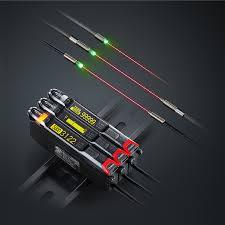
The global landscape for infrastructure development is undergoing a paradigm shift, characterized by the adoption of intelligent monitoring systems that ensure longevity and safety. Within this context, the Fiber Optic Sensor Market serves as a critical backbone for modern engineering feats. These sensors provide the ability to detect minute changes in strain, pressure, and temperature across vast distances, making them ideal for monitoring bridges, dams, and tunnels. Unlike traditional sensors that require extensive wiring and are prone to degradation, fiber optic systems offer a durable, low-maintenance alternative that provides continuous data streams. The ability to embed these sensors directly into composite materials or concrete structures allows engineers to monitor "living" data from the heart of the infrastructure. This proactive approach to structural health monitoring is essential for preventing catastrophic failures and optimizing the lifecycle of public works, especially in regions prone to seismic activity or extreme weather conditions.
A deep dive into Fiber Optic Sensor Market Business Insights reveals that the competitive landscape is being defined by innovation in interrogation units and signal processing software. Companies are no longer just selling hardware; they are providing end-to-end data solutions that integrate with cloud-based analytics platforms. This shift toward "Sensing as a Service" allows operators to receive actionable intelligence rather than raw data, facilitating faster decision-making. The commercialization of Bragg grating and Fabry-Perot technologies has opened doors in the medical and aerospace sectors, where precision is non-negotiable. As businesses look to scale, the focus has shifted toward reducing the "cost-per-sensing-point," making large-scale deployments more financially viable for private developers. The alignment of technological capability with market demand suggests a robust future where optical fibers are the central nervous system of our built environment, driving efficiency and safety in equal measure across diverse global sectors.
Which industries are the biggest adopters of fiber optic sensors? The oil and gas industry remains a leader, followed closely by civil engineering, aerospace, defense, and the rapidly growing medical device sector.
Are fiber optic sensors suitable for underwater applications? Yes, they are highly resistant to moisture and corrosion, making them perfect for subsea oil and gas exploration and long-term underwater structural monitoring.
➤➤➤Explore MRFR’s Related Ongoing Coverage In Semiconductor Industry:
Non Volatile Dual In Line Memory Module Market
Nordic Building Automation And Control Market
Optical Time Domain Reflectometer Market
Paint Process Automation Market
Passive Electronic Components In The Oil Gas Market

 English
 Arabic
 French
 Spanish
 Portuguese
 Deutsch
 Turkish
 Dutch
Dutch
 Italiano
 Russian
 Romaian
 Portuguese (Brazil)