


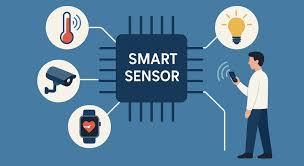
The modern consumer now expects a level of personalization and responsiveness that was unthinkable a decade ago. This shift is largely driven by the Smart Sensors Market, which provides the raw data necessary for predictive analytics. In the retail sector, for instance, smart sensors can track foot traffic patterns within a store, allowing managers to optimize layout and staffing in real-time. Smart mirrors in dressing rooms can suggest accessories based on the clothes a customer is trying on, creating a highly interactive shopping experience. Beyond retail, these trends are visible in the "Smart Home" sector, where devices learn a user's habits and adjust the environment automatically—turning on lights when someone enters a room or adjusting the heater before the occupants wake up. This transition from reactive devices to proactive assistants is a hallmark of current technological trends, making our interaction with the digital world more fluid and intuitive.
Current Smart Sensors Market trends also point toward an increased focus on security and privacy. As sensors become more embedded in our private lives, the risk of data misuse grows. Manufacturers are responding by implementing hardware-level encryption and more robust authentication protocols. Another significant trend is the rise of multi-sensor modules, which combine several different types of sensors—such as gyroscopes, accelerometers, and magnetometers—into a single package. These "sensor hubs" are essential for drones and robotics, providing the complex spatial awareness needed for stable flight and navigation. As AI algorithms become more efficient, they are being integrated directly into these sensor hubs, allowing the hardware to make autonomous decisions without needing to consult a central server. This move toward localized intelligence is expected to dominate the market in the coming years, enabling faster and more secure automated systems across the globe.
What is a sensor hub? A sensor hub is a single unit that integrates multiple types of sensors and a processor to manage and interpret data from all of them simultaneously, often used in smartphones and drones.
How is privacy being addressed in smart sensor development? Privacy is being addressed through hardware-level encryption, localized data processing (edge computing), and the development of stricter data-sharing regulations and protocols.

 English
 Arabic
 French
 Spanish
 Portuguese
 Deutsch
 Turkish
 Dutch
Dutch
 Russian
 Romaian
 Portuguese (Brazil)
 Tiếng Việt