


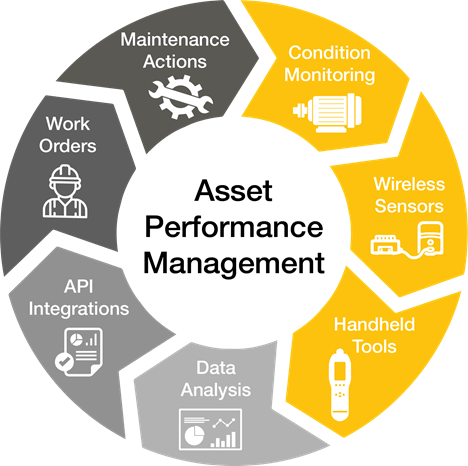
The Asset Performance Management (APM) market, having established itself as a critical tool for industrial efficiency, is now poised to enter a new phase of innovation, driven by more advanced AI and a deeper integration into business processes. The future is rich with transformative Asset Performance Management Market Opportunities that will move the technology from a predictive tool to an autonomous operational system. The single greatest opportunity lies in the evolution from predictive to prescriptive maintenance. While predicting a potential failure is valuable, the ultimate goal is to determine the absolute best course of action to take. Prescriptive analytics represents this next frontier. A prescriptive APM engine would not just alert a manager that a pump is likely to fail in 30 days; it would run a series of complex simulations to recommend the optimal response. It would consider factors like the current production schedule, the cost of downtime, the availability and cost of spare parts, the schedule of qualified technicians, and even the real-time market price of the plant's output. The AI could then prescribe a specific action, such as, "Perform a minor repair during the scheduled changeover next Tuesday, which has an 85% chance of extending the asset's life by six months at a minimal production impact."
Another profound opportunity is the use of APM to create a truly dynamic and intelligent supply chain for maintenance, repair, and operations (MRO). The maintenance of complex industrial assets requires a sophisticated supply chain for spare parts. The opportunity is to deeply integrate the APM platform with the enterprise's procurement and supply chain systems. When the APM system predicts a future need for a specific spare part, it could automatically check the inventory, and if the part is not available, it could automatically generate a purchase order with an approved supplier. This "predict-and-procure" model would ensure that the right part is always available at the right time, eliminating costly delays caused by waiting for parts to arrive. Going a step further, the aggregated data from an entire fleet of assets could be used to create highly accurate forecasts for future spare parts demand, allowing the entire MRO supply chain, including the part manufacturers and distributors, to operate more efficiently and reduce their own inventory carrying costs.
The advancement of computer vision and other novel sensing technologies is opening up new opportunities for data collection and analysis. Traditional APM has relied heavily on vibration and temperature sensors. The opportunity now is to use AI-powered computer vision to perform "visual inspections" at a scale and frequency that is impossible for humans. A camera, either fixed or mounted on a drone or robot, could continuously monitor a piece of equipment, and an AI model could be trained to visually detect signs of wear, corrosion, or leaks. Acoustic sensing is another emerging area. An AI can be trained to listen to the sound of a machine and detect the subtle changes in its acoustic signature that indicate a developing mechanical problem, much like an experienced mechanic can "hear" a problem. The integration of these new, non-invasive sensing modalities into the APM platform will provide a richer, more holistic view of asset health, leading to more accurate predictions and earlier detection of a wider range of failure modes.
Finally, there is a massive opportunity to democratize APM and make it more accessible and user-friendly for a broader range of industrial businesses and personnel. Currently, many advanced APM platforms require a team of specialized reliability engineers and data scientists to operate effectively. The opportunity is to create more "low-code" or "no-code" APM solutions. This would involve creating platforms with pre-built predictive models for common asset types (e.g., pumps, compressors, motors) and a simple, graphical interface that allows a plant manager or a maintenance supervisor, not a data scientist, to configure and deploy a predictive maintenance program. This could be delivered as an affordable, scalable SaaS solution targeted at small and medium-sized industrial enterprises, which represent a huge and largely underserved market. By making the power of predictive maintenance more accessible and easier to use, vendors can dramatically expand the adoption of the technology and bring the benefits of enhanced reliability and efficiency to the entire industrial sector.
Top Trending Reports:

 English
 Arabic
 French
 Spanish
 Portuguese
 Turkish
 Dutch
Dutch
 Italiano
 Russian
 Romaian
 Portuguese (Brazil)
 Tiếng Việt