
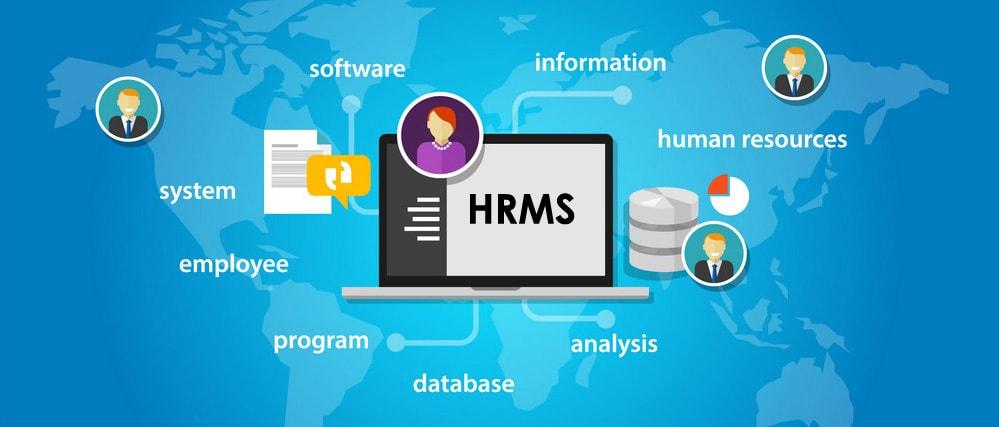
A practical Human Resources Management Software Market Analysis examines how organizations prioritize modules and what drives successful adoption. Many implementations start with core HR (employee records, org structures, and workflows) because it creates a reliable system of record. Payroll and time management often follow, as they provide immediate operational and compliance value. Talent modules—recruiting, onboarding, performance, learning—are frequently added as organizations seek better hiring outcomes and retention. Market analysis highlights that integration and data governance are major success factors; inconsistent job codes, locations, and employee attributes undermine reporting and automation. It also shows that buyer priorities differ by industry. Retail and manufacturing emphasize time tracking and scheduling, while professional services may focus on performance and skills development. Healthcare often prioritizes compliance reporting and credential tracking. Therefore, market segmentation is shaped by operational needs and regulatory pressure.
Adoption barriers are consistent across the market. HR data migration from legacy systems is difficult, especially when historical records are inconsistent or incomplete. Payroll transitions carry risk, requiring parallel runs, testing, and careful change management. Manager adoption can be a challenge if workflows feel burdensome or if policies are unclear. Employee adoption depends on intuitive self-service, mobile access, and responsive support. Market analysis also emphasizes the complexity of global deployments. Multi-country payroll, local labor rules, and language requirements increase implementation time and cost. Compliance and privacy requirements—data retention, access controls, and consent management—are increasingly important. Buyers evaluate vendors on localization, auditability, and security posture. Vendor ecosystem maturity matters too; strong integrations with benefits providers, tax services, and identity systems reduce friction. Therefore, market analysis often concludes that implementation capability and governance matter as much as feature lists.
ROI analysis is another core component. Organizations measure time saved in HR administration, reduced payroll errors, faster onboarding, and improved compliance outcomes. Recruiting ROI includes time-to-fill reductions and higher offer acceptance, while retention ROI includes reduced turnover and improved engagement. Analytics ROI can be harder to quantify but becomes valuable when leaders use workforce dashboards to plan hiring, manage labor costs, and identify risk areas. Market analysis warns that ROI is limited if modules are implemented without process redesign. For example, performance tools do not improve outcomes unless managers are trained and cycles are enforced. Similarly, learning platforms need relevant content and clear development pathways. Organizations that define KPIs early—payroll accuracy, onboarding completion time, manager task completion rates—tend to achieve stronger returns and faster stabilization after go-live.
Future-looking analysis suggests the market will shift toward skills-based management, automation, and more employee-centric service delivery. AI may assist with candidate matching, workforce insights, and HR support, but governance and bias mitigation will be required. Vendor differentiation will increasingly depend on UX, integration, and compliance strength. As remote work and global hiring persist, HRMS platforms that support distributed operations and multi-country compliance will gain advantage. The market analysis points toward consolidation into platforms that unify HR, payroll, and talent workflows, supported by analytics and automation. Ultimately, HRMS success will be measured by operational reliability and employee experience: systems that pay accurately, hire efficiently, and support development while maintaining privacy and compliance.
Top Trending Reports:
3D Time Of Flight Image Sensor Market

 English
 Arabic
 French
 Spanish
 Portuguese
 Deutsch
 Turkish
 Dutch
Dutch
 Italiano
 Russian
 Romaian
 Portuguese (Brazil)