


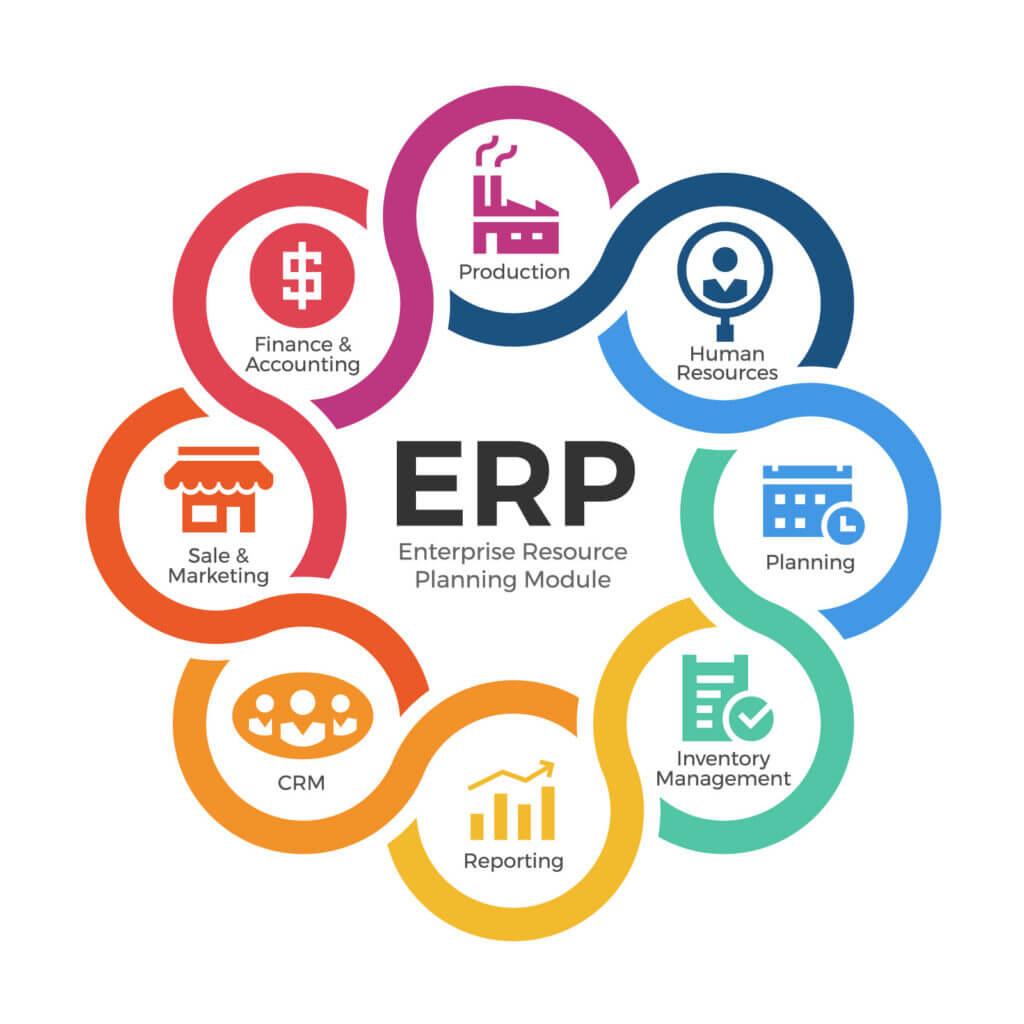
A profound and transformative trend that is reshaping the global ERP Software Market is the deep and pervasive infusion of artificial intelligence and machine learning into the core of the enterprise resource planning platform. For decades, ERP systems have been powerful "systems of record," excelling at capturing and organizing vast amounts of transactional data. The new paradigm is to transform the ERP into an intelligent "system of action," using AI to analyze this data, to generate predictive insights, and to automate complex business processes. This "intelligent ERP" is not a futuristic concept; it is happening now, and it is a major area of investment and competition for all the leading vendors. AI is being embedded into every major ERP module. In finance, it is used for predictive cash flow forecasting and for automating the accounts payable process. In supply chain, it is used for more accurate demand forecasting and for optimizing inventory levels. In HR, it is used to predict employee attrition and to personalize learning and development paths. This infusion of AI is a game-changer, promising to deliver a new level of operational efficiency and data-driven decision-making for businesses around the world. The demand for these intelligent capabilities is a primary driver of new ERP sales and upgrades.
Market Key Players
The key players leading the charge in building the intelligent ERP are the major ERP vendors themselves, who are in a fierce "AI arms race." SAP is a key player, having invested heavily in integrating its "Joule" AI co-pilot and its broader Business AI capabilities across its entire S/4HANA Cloud suite. Its strategy is to embed AI directly into the core business processes that its software manages. Oracle is another major key player, similarly infusing AI and machine learning capabilities throughout its Oracle Fusion Cloud applications, with a particular strength in AI for finance and supply chain management. Microsoft is a key player, leveraging its massive investment in OpenAI and its Azure AI platform to build a powerful "Copilot" experience for its Dynamics 365 ERP and CRM applications, aiming to provide a unified, conversational AI assistant across the entire Microsoft ecosystem. The major global cloud providers are also key players in this landscape, as their cloud AI/ML platforms are often used by enterprises to build custom AI models that can be integrated with their ERP systems. The major global system integrators are also crucial, as they provide the data science and implementation expertise needed to help clients to actually get value from these new AI features.
Market Segmentation
The AI trend is creating a new and important segmentation within the ERP market, based on the type of AI capability being offered. The first segment is "Embedded AI," where predictive analytics and automation features are built directly into the standard ERP modules by the vendor. This is the most common and accessible form of AI in ERP. The second segment is the "AI Platform," where the ERP vendor provides a platform-as-a-service (PaaS) that allows a company's own data scientists to build, train, and deploy their own custom machine learning models on top of the ERP data. The third, and most rapidly emerging, segment is "Generative AI." This involves the integration of large language models (LLMs) into the ERP system to enable a new, conversational user experience and to automate a wide range of content creation and summarization tasks. By function, this segmentation means that almost every traditional ERP module—from finance to HR—now has an "intelligent" sub-segment, such as "AI-powered financial close" or "AI-driven talent acquisition." The ability of a vendor to offer a comprehensive and powerful suite of these different AI capabilities is a major competitive differentiator.
Market Region & Market Trends
The adoption of AI in ERP is a global trend, but the level of maturity varies by region. North America is the leading region, with a large number of enterprises already deploying advanced AI use cases, particularly in areas like predictive analytics for supply chain and AI-driven personalization in retail. The highly competitive and tech-savvy US market is a major driver of this innovation. Europe is also a mature market, with a strong focus on using AI for manufacturing optimization (Industry 4.0) and a growing emphasis on ensuring that the use of AI is compliant with its strict data privacy and AI regulations (like the EU AI Act). The Asia-Pacific (APAC) region is a hyper-growth market for AI in ERP, with businesses leapfrogging older technologies and adopting the latest intelligent cloud ERP platforms to drive their rapid growth. The key global trend for the future is the rise of the "autonomous enterprise," a vision where a significant portion of routine business decisions and processes are fully automated by an AI-powered ERP system, with humans moving to a role of managing by exception. This is the long-term vision that is fueling the immense investment in this space. The ERP Software Market is projected to grow to USD 172.51 Billion by 2035, exhibiting a CAGR of 9.4% during the forecast period 2025-2035.
Most Popular Market Research Reports:
India Integration Platform As A Service (Ipaas) Market
Italy Integration Platform As A Service (Ipaas) Market
Japan Integration Platform As A Service (Ipaas) Market

 English
 Arabic
 French
 Spanish
 Portuguese
 Deutsch
 Turkish
 Dutch
Dutch
 Italiano
 Russian
 Romaian
 Portuguese (Brazil)